


































































































Key Takeaways
- Puzzles enhance cognitive skills and creativity.
- Variety of puzzles available for different age groups.
- Consider material and safety for children's puzzles.
- Interactive puzzles can boost engagement for kids.
Puzzles are more than just a fun pastime; they are a powerful tool in the development of cognitive skills in children. From enhancing problem-solving abilities to promoting creativity, puzzles offer a myriad of benefits for kids of all ages. In this article, we will explore the best puzzles for kids, breaking down options by age, type, and other considerations to help you make an informed choice.
With countless options available on the market, finding the right puzzle can be overwhelming. This guide serves as a comprehensive resource to navigate the best choices for your little ones. Whether you are searching for a gift or simply looking to keep your children engaged, we’ve got you covered.
As we delve into the world of puzzles, you will learn about different types, the developmental benefits they offer, and practical tips for selecting the best ones for your kids. Let’s get started!
Why Puzzles are Important for Kids
Puzzles provide children with an opportunity to develop various skills while having fun. They challenge young minds and encourage critical thinking. Here are a few key benefits:
- Cognitive Development: Completing puzzles requires children to think critically and logically. As they figure out how pieces fit together, they enhance their problem-solving skills.
- Fine Motor Skills: Manipulating puzzle pieces helps improve hand-eye coordination and fine motor skills, which are crucial for tasks like writing and using tools.
- Social Skills: Working on puzzles with others fosters collaboration and communication. Children learn to share ideas and work as a team, which are important social skills.
Through these various benefits, puzzles act as a multifaceted educational tool that can be incorporated into playtime.

Types of Puzzles for Kids
When selecting a puzzle for your child, it’s important to consider the type of puzzle that best suits their interests and developmental stage. Here are some popular types:
Jigsaw Puzzles
Jigsaw puzzles are perhaps the most well-known type. They come in various themes and difficulty levels, making them suitable for a wide range of ages. Here are some key points about jigsaw puzzles:
- Available in different piece counts, from a few large pieces for toddlers to thousands for older children.
- Themes can include animals, landscapes, cartoons, and more, appealing to various interests.
- They encourage patience and perseverance as children work to complete them.
3D Puzzles
3D puzzles take puzzle-solving to the next level by allowing kids to construct three-dimensional models. They often involve famous landmarks, vehicles, or fantasy structures.
- These puzzles enhance spatial awareness and engineering skills.
- They provide a unique challenge as they require different thinking strategies compared to flat puzzles.
- Kids can display completed 3D puzzles as decorative pieces in their rooms.
Wooden Puzzles
Wooden puzzles are durable and often come in fun shapes and designs, making them popular among younger children.
- They are often designed with educational themes, such as alphabet or number puzzles.
- Made from non-toxic materials, they are safe for younger kids.
- Wooden puzzles can help with color recognition and shape identification.
Choosing the Right Puzzle by Age Group
When selecting a puzzle, age appropriateness is key. Here’s a breakdown by age group to help you choose wisely:
Toddlers (1-3 years)
For toddlers, look for puzzles that are large, colorful, and easy to handle. Consider these options:
- Chunky Puzzles: These have thick pieces that are easy for small hands to grasp.
- Shape Sorters: These puzzles help toddlers learn about shapes and improve fine motor skills.
- Animal Puzzles: Simple puzzles featuring animals can be both fun and educational.
Preschoolers (3-5 years)
Preschoolers can handle slightly more complex puzzles. Here are some suggestions:
- Jigsaw Puzzles with Fewer Pieces: Puzzles with around 12-24 pieces are suitable for this age group.
- Interactive Puzzles: Look for puzzles that include sounds or textures for a multi-sensory experience.
- Story-Based Puzzles: Puzzles that tell a story can engage children’s imagination.
School-Aged Children (6+ years)
For school-aged children, the sky’s the limit. Consider these options:
- Advanced Jigsaw Puzzles: Puzzles with 100-500 pieces can provide a satisfying challenge.
- 3D and Mechanical Puzzles: These can stimulate interest in science and engineering.
- Educational Puzzles: Geography, history, or math puzzles can make learning fun.

Materials and Safety Considerations
When it comes to puzzles, material quality and safety are critical, especially for younger children. Here are some factors to consider:
Material
Puzzles can be made from various materials, each with its pros and cons:
- Wood: Durable and often more environmentally friendly, wooden puzzles are great for younger kids.
- Cardboard: Commonly used for jigsaw puzzles, cardboard is lightweight and easy to store, but it may not be as durable.
- Plastic: Some puzzles are made from plastic, which can be water-resistant and easy to clean, but check for BPA-free labels.
Safety
Always check for safety certifications when purchasing puzzles:
- Non-Toxic Materials: Ensure that the puzzle is made from safe, non-toxic materials.
- Avoid Small Parts: For younger children, choose puzzles without small pieces to prevent choking hazards.
- Age Recommendations: Follow age recommendations provided by manufacturers closely.
Engaging with Puzzles: Tips for Parents
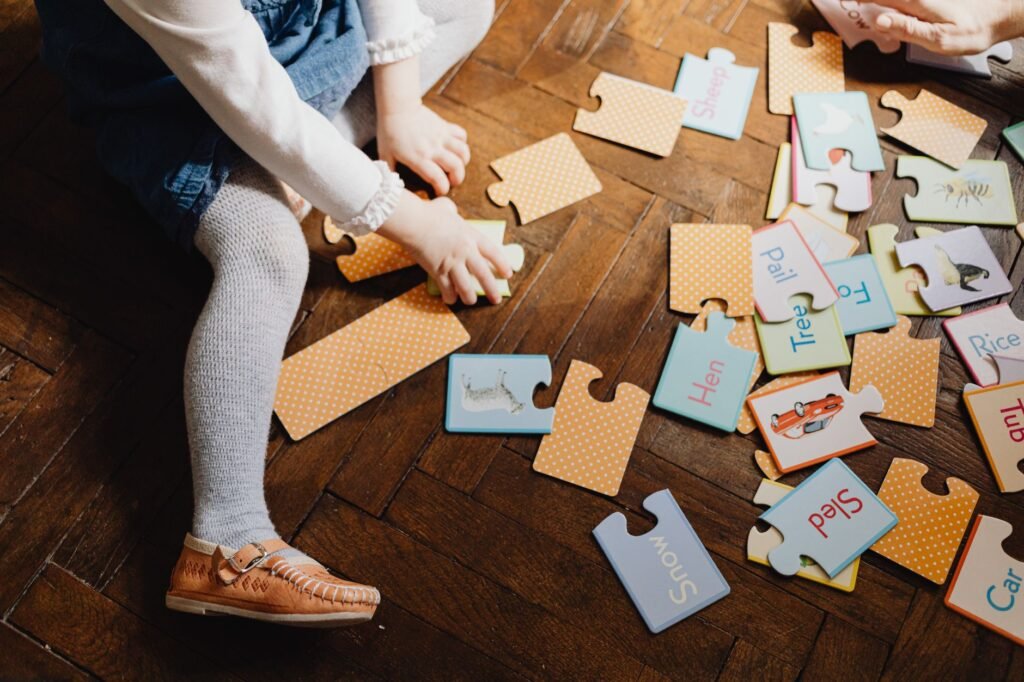
Encouraging your child to engage with puzzles can be a rewarding experience. Here are some tips for parents:
- Make It a Family Activity: Set aside time for family puzzle nights. This can foster bonding and teamwork.
- Encourage Problem-Solving: Instead of giving answers, ask guiding questions that encourage your child to think critically.
- Rotate Puzzles: Keep a variety of puzzles on hand and rotate them to maintain your child’s interest.
By creating a supportive environment, you can enhance your child’s experience with puzzles and make learning enjoyable.

Creative Puzzle Variations to Boost Imagination
3D Puzzles: A New Dimension
3D puzzles are an excellent way to take traditional puzzle-solving to the next level. They encourage spatial reasoning and creativity as children manipulate pieces to create structures rather than flat images. These puzzles often come in various themes, from famous landmarks to animals, providing an engaging challenge for kids aged 8 and up.
Many 3D puzzles are constructed using foam or cardboard, making them lightweight and easy to assemble. Unlike traditional jigsaw puzzles, which are flat, 3D puzzles require children to think about how pieces fit together in three dimensions. This unique challenge can enhance problem-solving skills and boost a child’s confidence as they complete their creation.
- Enhances spatial awareness
- Encourages fine motor skills
- Promotes teamwork when done in groups
Interactive Puzzle Games for Tech-Savvy Kids
In today’s digital age, many kids are drawn to technology. Interactive puzzle games available on tablets and smartphones can be an effective way to engage children in puzzle-solving while also incorporating technology. These games often include various challenges, from logic puzzles to word games, catering to a wide range of interests and skill levels.
Many interactive puzzles also promote cognitive skills such as memory, attention to detail, and strategic thinking. Parents can encourage their children to balance screen time with traditional puzzles by setting limits on game use and providing rewarding experiences with physical puzzles.
- Variety of themes and challenges
- Progress tracking and achievement rewards
- Multiplayer options for social interaction
Educational Puzzles that Teach While They Play
Educational puzzles are designed to make learning enjoyable. These puzzles often focus on subjects like geography, math, and language arts, allowing children to develop essential skills while having fun. For instance, geography puzzles can help kids learn about countries, capitals, and landmarks, while math puzzles can reinforce addition and subtraction skills through engaging gameplay.
The integration of educational content into puzzles can be particularly beneficial for younger children, as it offers a hands-on approach to learning. Many educational puzzles also include interactive elements, such as sound or augmented reality features, to further enhance the learning experience.
- Supports educational development
- Encourages curiosity and exploration
- Can be used in both home and classroom settings
The Benefits of Collaborative Puzzle Solving
Building Social Skills Through Team Efforts
Puzzle-solving is often seen as a solitary activity, but it can also be a powerful way to foster social skills among children. When kids work together to complete a puzzle, they learn important lessons in collaboration, communication, and patience. This teamwork not only helps develop social bonds but also teaches children how to express their ideas and listen to others.
Group puzzle activities can be organized in various settings, such as classrooms, playdates, or family game nights. These experiences encourage children to share their thoughts on puzzle strategies, negotiate roles, and celebrate collective achievements, which are essential skills for their future interactions.
- Improves cooperation and teamwork
- Encourages effective communication
- Teaches conflict resolution skills
Setting Up Puzzle Challenges for Friendly Competition
Creating friendly competitions around puzzles can add an exciting twist to the traditional puzzle-solving experience. Parents or educators can set up timed puzzle challenges where children race against the clock to complete a puzzle. This competitive aspect can motivate children to improve their skills and work more efficiently.
These challenges can be organized in various formats, such as individual races or team competitions. Offering small prizes for completing challenges can further encourage participation and enthusiasm for puzzle-solving. This approach not only enhances problem-solving skills but also teaches children how to handle both winning and losing gracefully.
- Encourages healthy competition
- Fosters a sense of achievement
- Can be adapted for various age groups
Promoting Emotional Intelligence Through Puzzle Play
Puzzles can also serve as a tool for promoting emotional intelligence in children. As they encounter challenges during puzzle-solving, they learn to manage frustration and develop resilience. This process can be beneficial for emotional growth, teaching kids how to deal with setbacks and persist despite difficulties.
Moreover, discussing emotions during puzzle play can help children articulate their feelings. Parents can use puzzle-solving as a moment to ask kids how they feel about their progress or if they encounter any challenges. This practice can encourage emotional expression and support children in recognizing and managing their emotions.
- Encourages self-reflection
- Teaches coping strategies for frustration
- Enhances empathy through shared experiences
Innovative Puzzle Formats to Keep Kids Engaged
Augmented Reality Puzzles: The Future of Puzzle Solving
Augmented reality (AR) puzzles are becoming increasingly popular, combining traditional puzzle-solving with cutting-edge technology. These puzzles come with a companion app that brings images to life through a smartphone or tablet. As children complete the physical puzzle, they can then use the app to see animations, play games, or explore additional content related to the puzzle theme.
This innovative approach not only makes puzzles more engaging but also introduces children to technology in an educational context. AR puzzles can stimulate curiosity and foster an interest in STEM (science, technology, engineering, and mathematics) fields, encouraging kids to explore and learn while they play.
- Enhances engagement with interactive elements
- Encourages exploration of technology
- Broadens the potential for learning
Escape Room Puzzles for Group Problem Solving
Escape room puzzles are designed to be solved in teams, providing an immersive and collaborative experience. These puzzles often include a series of interconnected challenges that players must solve to
Frequently Asked Questions
What age is appropriate for puzzles?
Puzzles can be suitable for children as young as 1 year old, with options available that cater to different developmental stages. Always check the age recommendation on the packaging.
How do puzzles benefit children?
Puzzles help develop cognitive skills, improve fine motor skills, and encourage social interaction. They also promote patience and persistence.
What materials are best for children’s puzzles?
Wood and high-quality cardboard are often recommended for children’s puzzles due to their durability and safety. Always look for non-toxic options.
Can puzzles be educational?
Yes, many puzzles are designed to be educational, covering topics such as numbers, letters, geography, and history, making them a fun learning tool.
The Bottom Line
Puzzles are a fantastic way to engage children while promoting essential developmental skills. With a variety of types and age-appropriate options, there is a perfect puzzle for every child. By considering safety, material, and educational value, you can choose puzzles that not only entertain but also enrich your child’s learning experience.