This article was written with AI assistance and reviewed for accuracy where possible; details about unreleased or rumored products may change.
Welcoming a new baby into your home is one of life’s most exciting chapters, but it often comes with a significant challenge: the sheer volume of gear that accompanies a tiny human. If you are working with a smaller room, the pressure to maximize every square inch can feel overwhelming. The good news is that a small nursery doesn’t have to feel cluttered or chaotic. With a bit of strategic planning and a focus on vertical space, you can create a serene, organized sanctuary that functions perfectly for both you and your little one.
Think Vertically: Utilizing Your Wall Space
When floor space is at a premium, the only way to go is up. Walls are your best friend in a small nursery. Instead of relying on bulky dressers or floor-bound bookshelves, look toward open shelving. Installing wall-mounted floating shelves allows you to store essentials like diapers, wipes, and nursery decor without taking up a single inch of your precious floor space. Consider grouping items by frequency of use; keep the daily necessities within easy reach of your changing table and save the higher shelves for decorative items or keepsakes.
Pegboards are another game-changer for the nursery. These versatile boards can be mounted near your changing station to hold everything from hair bows and baby accessories to baskets filled with creams and lotions. By hanging these items, you clear off the top of your dresser or changing table, providing a safer, cleaner surface for diaper changes. You can even customize the layout of the pegs as your baby grows and your storage needs change, making it a truly future-proof solution for any nursery.
The Multi-Functional Furniture Approach
In a small room, every piece of furniture needs to earn its keep. If a piece of furniture only serves one purpose, it might not be the right fit for your layout. Look for items that pull double duty, such as a changing table that features open shelving underneath rather than a solid cabinet. This allows you to slide storage bins into the space, keeping clothes and diapers organized while maintaining an airy, open feel that makes the room appear larger.
Consider an ottoman with internal storage for your nursing or reading nook. It provides a place to rest your feet during those late-night feeding sessions while hiding away blankets, extra sleepers, or even a stash of board books. When shopping for nursery furniture, always look for pieces that offer hidden compartments or drawers. Even a small nightstand with a drawer is superior to a simple side table, as it provides a dedicated spot to tuck away pacifiers, burp cloths, and other small items that would otherwise clutter your surfaces.
Mastering the Closet: Beyond the Rod
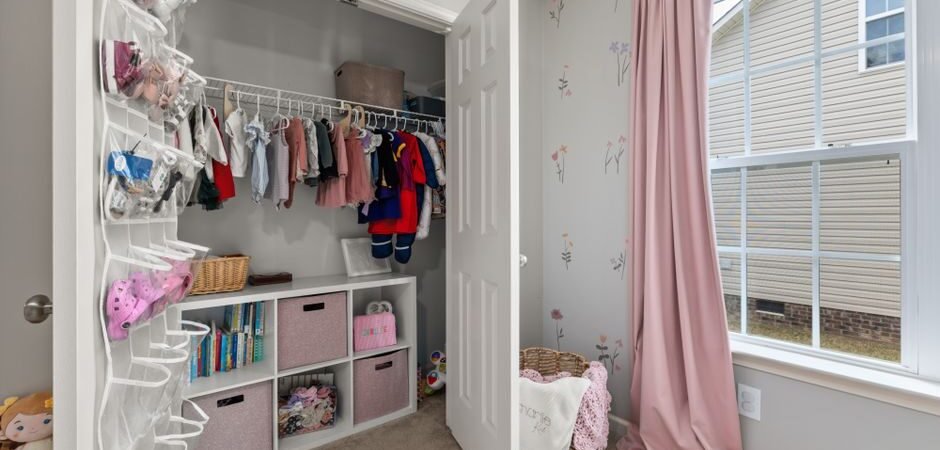
The closet is often the most underutilized space in a small nursery. Many standard nursery closets come with a single rod and a shelf, which leaves a massive amount of wasted air space beneath the hanging clothes. To maximize this, add a modular shelving unit or a set of drawers inside the closet. This can effectively double your storage capacity, allowing you to move items like onesies, bodysuits, and pants out of the room and into the closet.
Don’t forget the back of the closet door. An over-the-door organizer is perfect for stashing shoes, hats, socks, and other baby accessories. By keeping these smaller items in an organizer, you avoid the need for extra baskets or bins on your shelves or floor. If you have the space, adding a second hanging rod at a lower height is also a fantastic way to increase your clothing storage. Since baby clothes are so short, you can easily fit two rows of clothing without them dragging on the floor, effectively doubling your garment storage capacity.
Under-Crib Organization: The Hidden Hero
The area under the crib is often ignored, yet it is prime real estate in a compact nursery. Because the crib is the focal point of the room, you want to keep the area around it looking tidy. Using low-profile rolling bins or under-bed storage containers allows you to utilize that dark, empty space for items you don’t need daily, such as out-of-season clothing, extra bedding, or backup supplies like diapers and wipes.
Look for containers that slide easily on the floor to avoid scratching your nursery flooring. These bins are perfect for storing items that you need to access quickly but don’t want on display. Because these containers are tucked away under the crib, they keep the room looking clean and minimalist. If you prefer a more aesthetic look, choose woven baskets that match your nursery decor, or opt for fabric bins with lids to keep dust away from linens and spare clothes.
Curating Your Essentials: The Power of Less
Sometimes the best way to handle storage in a small space is to simply store less. It is easy to get caught up in the excitement of baby shopping and acquire far more gear than you actually need. Take a critical look at your inventory. Do you really need ten different types of swaddles? Can you rotate your baby’s toy collection rather than having them all out at once? By curating what is in the room, you naturally create more space.
Consider keeping only the items your baby currently uses in the nursery. If they are in the 0-24M category, their needs change rapidly. Keep your current size items accessible and pack away the next size up in bins in a hallway closet or under the bed in your own room. This prevents the nursery from becoming a warehouse for future gear. Regularly purging items that no longer fit or that your baby has outgrown will help maintain a sense of calm and order in your space.
Styling Your Storage: Form Meets Function
Storage doesn’t have to be purely utilitarian; it can also contribute to the overall design of the room. When you are forced to have items on display because you lack closed cabinets, make sure they look intentional. Choose matching bins and baskets to create a cohesive look. Uniformity is the secret to making small spaces feel organized rather than cluttered. Whether you prefer natural rattan, fabric, or sleek plastic, sticking to a consistent color palette will help the eye move through the room smoothly.
Labels are another way to keep your storage looking sharp while staying organized. Small wooden tags or simple printed labels can help you identify exactly what is in each basket, saving you time when you are fumbling for a spare onesie during a quick change. Incorporating decorative elements, like a beautiful tray on your dresser for your daily essentials, elevates the look of your storage. A well-organized space that is also aesthetically pleasing will make your time spent in the nursery feel much more relaxing and enjoyable.
Preparing for Growth: Adapting Your Space
Finally, remember that a nursery is a dynamic space that will evolve as your baby grows. The storage solutions that work for a newborn won’t necessarily work for a toddler. When planning your small nursery, opt for flexible solutions. Shelving units that can be rearranged, bins that can be repurposed for toys, and furniture that can transition from a changing table to a bookshelf will serve you well over the years.
Don’t be afraid to experiment with your layout. If a piece of furniture isn’t working for your workflow, move it. If you find your shelves are getting crowded, look for other vertical opportunities in the room. The goal is to create a space that supports your needs and keeps you organized, allowing you to focus on what really matters: spending time with your baby. With a bit of creativity and these simple strategies, your small nursery can be just as functional and beautiful as any larger room.
A Final Note on Safety
Regardless of how you choose to organize your nursery, safety should always be the priority. Ensure that any wall-mounted shelves, pegboards, or furniture are securely anchored to the wall to prevent tipping. When using storage bins or baskets, avoid overstuffing them to the point where they become heavy or unstable. Keep heavy items on the lowest shelves and ensure that any small, loose items are stored in containers with secure lids to prevent choking hazards. By keeping safety at the forefront of your storage design, you can enjoy a beautifully organized, stress-free nursery for years to come.